
I built this amazing Shopify website from scratch using nothing but Claude
And it was… a massive waste of time.

Update, August 2026: I wrote this in May and concluded that building a Shopify site with Claude was a massive waste of time. Three months later, I’ve changed my mind because AI has already moved on and fixed the biggest problem with this setup. The original post is below exactly as it was, and the new bit picks up under What I got wrong and you can skip directly to it.
Over the last few weeks I’ve been seeing posts all over Instagram about how AI is making web designers redundant and how you can get Claude to redesign your Shopify store in minutes and launch it with one click. Which to me sound rather worrying because I happen to be a web designer myself.
So I thought I’d test Claude out and see if it is coming for my job any time soon and also to check how fast I can build an online store for my would-be cosmetic brand with this tool.
Like most web designers, I of course rely quite heavily on AI to make my job easier and faster so I’m not opposed to the idea of Claude helping the process even further. But I wanted to test it for myself first.
I set out with a goal of building a beautiful, animated website which would be fully integrated with the Shopify backend. The design process itself was actually brilliant, as the homepage mockup created by Claude in minutes was high quality, matched my spec perfectly and would normally take me hours to design. So far so good.
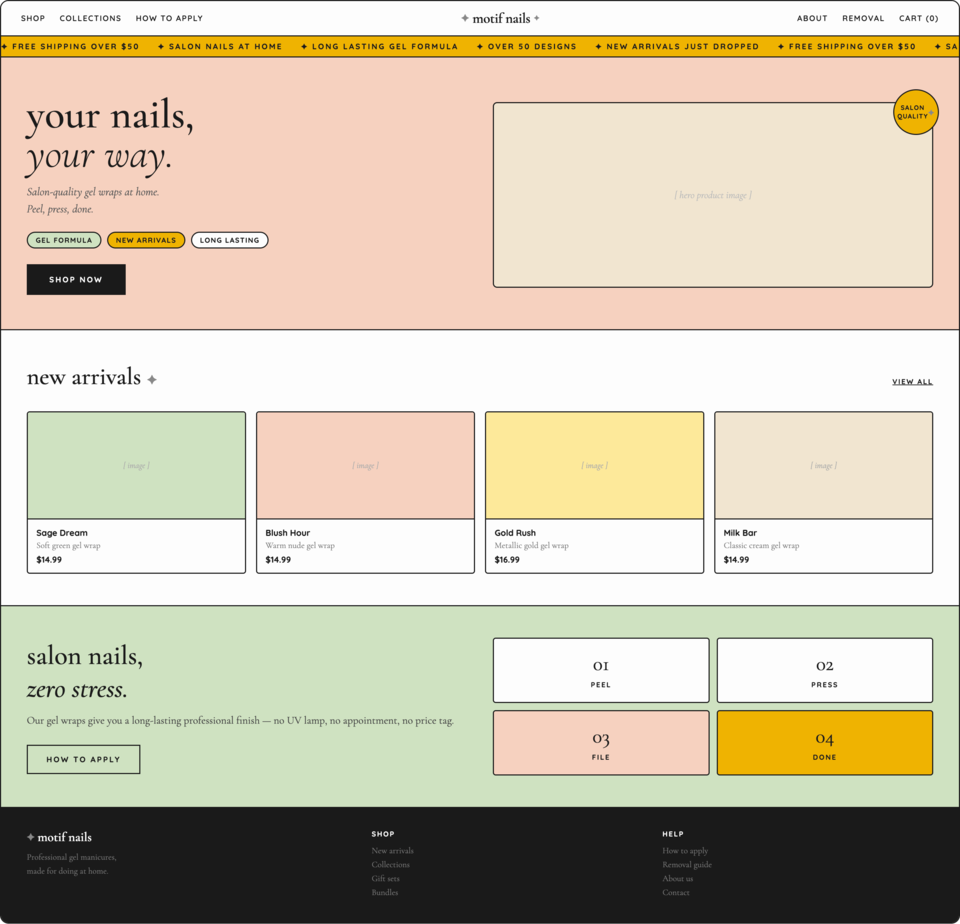
Interestingly, although very pretty and perfect from the point of UX, the design wasn’t optimised for sales and didn’t include elements which could drive potential sales, like including social proof, trust signals, or different types of photos. This is something I’m able to spot and correct as a professional web designer but the average brand owner who is just trying to build their first Shopify store and save some money on web design, I’m sure I’d just follow the advice of AI who I’d assume knows more than me.
Claude develops my Shopify website
The next hurdle is the issue of moving my design into my Shopify test store somehow. By Claude’s own admission, there isn’t a ‘one click solution’ available, you need to get the code created by Claude and copy and paste it bit by bit into the Shopify backend. And it’s not a straightforward process of grabbing the whole page design and putting it on the website.
The first choice is whether to have Claude create the code from scratch or use the free Dawn theme as the foundations to put everything on (which is strongly recommended).
The next step is to update the liquid code created by Claude section by section, like the CSS stylesheet, page sections or the main liquid file. Claude will provide instructions on how to do that but, unless you’re quite familiar with the Shopify backend and editing code, it’s neither straightforward nor fast!

Where things go wrong
The next part is where is where the whole concept of designing with AI falls apart for me. The code created by Claude is far from ‘plug in and play’. You upload it to your website and only then discover that it leaves too much empty space or that the font size is not screen responsive. From there, the process feels a lot like training an intern on their first day to perform the most basic tasks in your job. The dialogue goes something like this:
Me: Claude, this text is barely readable, can you increase text by about 30%
Claude: Do you want to increase just the headers or all text?
Me: If you make the headers bigger but leave the body the same, it will look off. You have to increase everything.
Claude: Okay, here’s the new code for you to paste into every single section we spent the last 3 hours creating.
Ugh.
Then, you need to take your AI intern by the hand and create the elements you know are missing from his design entirely. In all fairness, Claude does a great job predicting your design needs, intuitively making new sections which perfectly fit the rest of the design. It even added animations here and there because I indicated I want the website to be interactive, without me having to prompt that expressly.
The result, as you can see, is a beautiful website which makes me want to purchase this product doesn’t even exist. Was it quick and easy? Not one bit. If I were a Shopify brand owner, I would be much better served getting a premium (or even a free theme) from the Shopify store and customise it to my brand. If your vision isn’t super specific yet or aren’t too fussed about particular details you’d want on the website, you can achieve a functioning Shopify store like this in just a few hours.
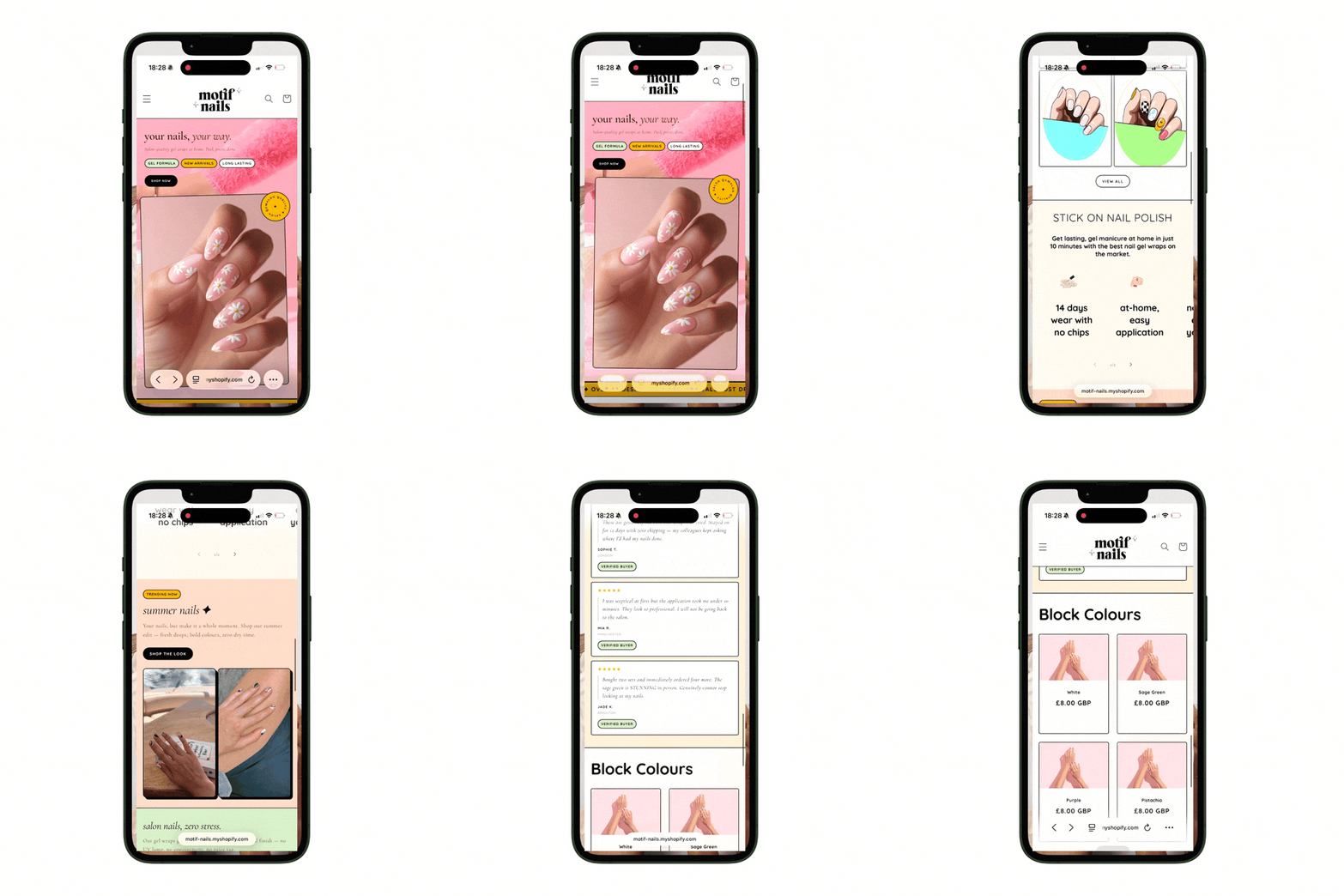
As a web designer, I won’t be losing sleep worrying about Claude replacing me any time soon. But I will be using it in my own design process going forward!
What I got wrong
That was May. I’ve spent a good chunk of the summer since then researching how AI actually gets used in ecommerce, and I now think the post above is half right.
The half that’s right: everything about the output. Claude’s designs still aren’t optimised for selling unless you tell them to be, and a brand owner with no budget is still better off buying a good theme and customising it. I’ll stand behind both of those for a while yet.
The part where I need to now revise is the implementation. Back in May there wasn’t yet a tool allowing Claude to interact with the code in Shopify directly, meaning copying and pasting it manually into Liquid was the only way. But AI moves fast and now I found a better way.
The correct setup – and a big improvement on my previous method of creating code section by section in Claude and then pasting it into Shopify’s Liquid – came to me from a YouTube video by Brendan Gillen. I’m not going to bore you with the technical details because this is not that type of blog but it requires connecting your store to Claude either using GitHub or Visual Studio. Neither one of these methods is doable if you’ve ever described yourself as ‘non-technical’.
For my Claude Shopify integration I chose Git Hub because it also offers a nice backup plan for if anything was to go wrong and I could easily bring back any version of the site I’d choose. It was bloody difficult but once set up, I can, using plain language, tell Claude what to do and it pushes all the edits directly into my store.
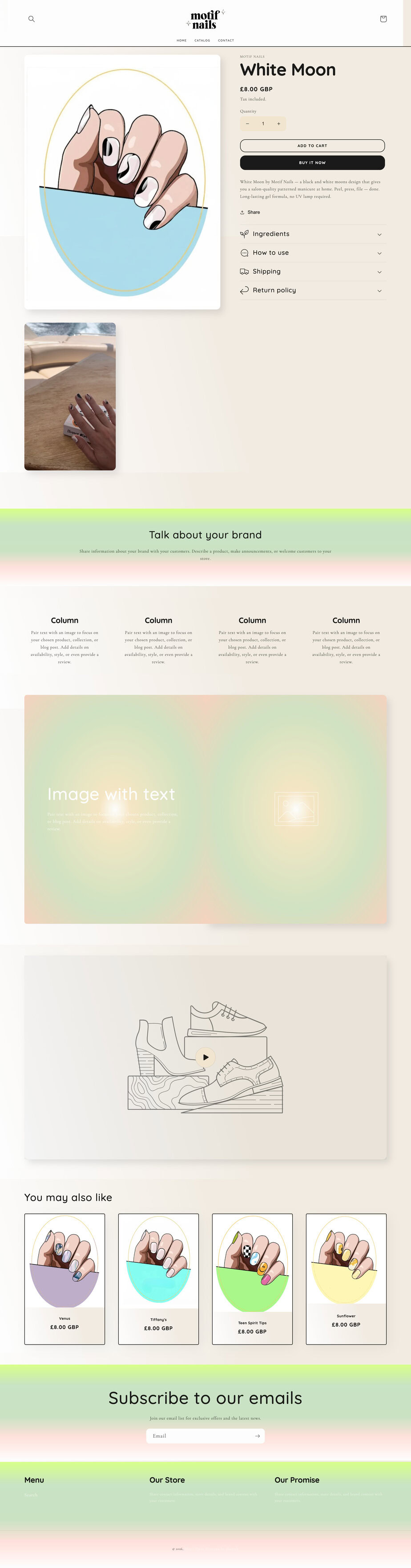
My other discovery is Claude is only as good as the data you feed it to begin with. So, rather than letting it design a product page, I gave it a layout of the perfect product page and asked it to use the existing design to make it happen. Here’s the product page ‘out of the box’, using the product template vs using my framework:
Before
(customised Shopify template)
After
(built with Claude using my framework)
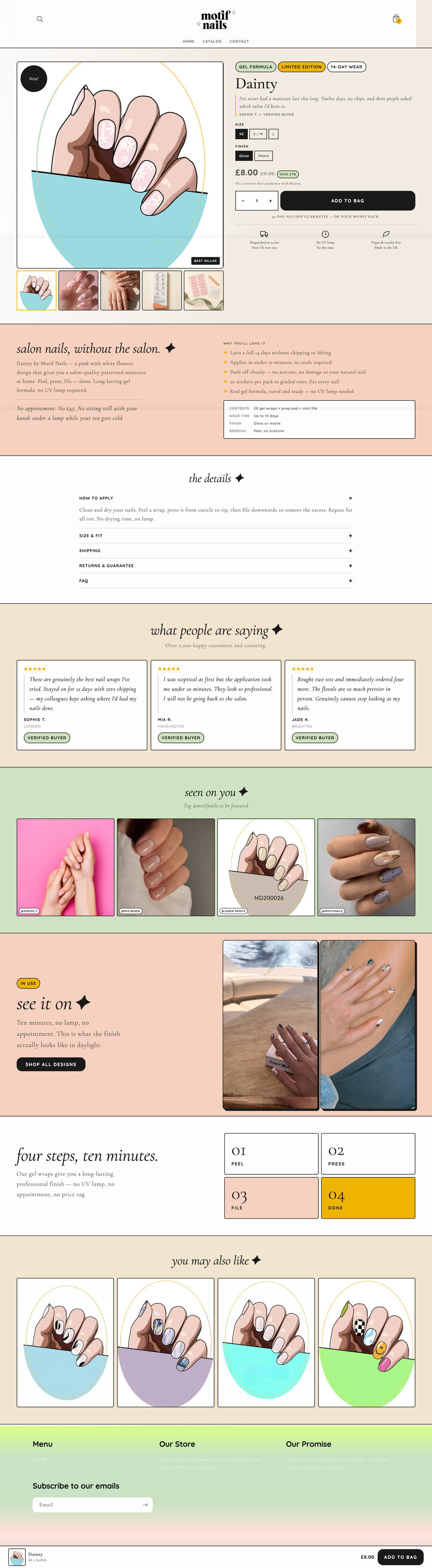
now we’re talking.
What this actually makes possible
For the first time, I can build a Shopify store exactly the way I want it, down to the last pixel, and then hand it over to a client to run themselves without any trouble.
That combination didn’t exist before. Previously I could either custom-code something and make it unusable for anyone without a computer science degree, or work inside a template and accept its limits. Now the theme editor still works perfectly for the client, every section is properly configurable, and the design isn’t compromised.
It also means far fewer apps. Subscriptions, product labels, custom badges, the sort of thing you’d normally bolt on at £15 a month each. Most of that can be built into the theme now. For a store running six or seven apps that’s a few hundred pounds a year back, plus the page speed, which is the bit that actually shows up in your conversion rate.
So did I just talk myself out of a job?
Theoretically yes, if my clients decide to spend their evenings learning Claude Code, the command line and GitHub. It’s all learnable. Nothing in the setup above requires a degree.
But most of my clients are busy with product formulations, packaging suppliers, sales tax, the wholesale enquiry that’s been sitting unanswered for four days, and a customer who wants to know whether the candle is vegan. They don’t want to learn git. Nor should they have to.
The updated verdict
I said in May that I wouldn’t be losing sleep over Claude replacing me. That’s still true, but for a completely different reason than I thought at the time.
What’s changed isn’t that Shopify design became a DIY job. It’s that the ceiling moved. The things I used to gently talk clients out of, the custom subscription flow, the animation that carries the whole brand, the product labels that would otherwise mean another app, are all on the table now at a budget that didn’t reach them last year.
So if you’ve been told something isn’t possible on Shopify without a developer, an app, or a five-figure budget, it’s worth asking again. The answer is probably different this year.
And the advice I gave in May still stands, unchanged: if you’re a start-up brand with no budget for a designer, buy a good theme and customise it. That hasn’t moved at all.
If you want the setup detail I’ve skipped over here, including every method of connecting Claude to a Shopify store and which one is worth your afternoon, I’ve written that up separately: How to connect Claude to your Shopify store.